
Welcome, Explorer.
Every corner of our planet has a story waiting to be discovered. Today, we are chasing the most beautiful waterfalls in the world, from mighty natural wonders that shake the ground beneath your feet to peaceful hidden escapes deep inside untouched jungle. Pack your curiosity, and let us explore.
Some places do not need an introduction.
You hear them long before you see them. The distant roar grows louder with every step. Cool mist settles on your face. The air feels fresher, the landscape greener, and for a moment, everything else fades away.
Standing in front of a great waterfall has a way of making the world feel wonderfully simple.
Across every continent, waterfalls have shaped landscapes, inspired legends, and drawn travellers searching for nature at its most powerful. Some plunge from towering cliffs deep within untouched rainforests. Others stretch across international borders, filling the air with mist visible from miles away. Each one has its own story, its own character, and its own way of leaving visitors completely speechless.
This guide covers 25 of the most beautiful waterfalls on Earth. From world-famous icons to remarkable hidden gems, these are the waterfalls every nature lover should know about.
Quick Facts: Most Beautiful Waterfalls in the World
| Fact | Detail |
|---|---|
| Tallest waterfall | Angel Falls, Venezuela (979 metres) |
| Widest waterfall | Khone Phapheng Falls, Laos (10,783 metres wide) |
| Largest by volume | Boyoma Falls, Democratic Republic of Congo |
| Largest system | Iguazu Falls (275 individual cascades) |
| Number of waterfalls in Iceland | Approximately 10,000 |
| UNESCO-listed waterfalls | Victoria Falls, Iguazu Falls, Plitvice, and others |
Table of Contents
- Victoria Falls, Zambia and Zimbabwe
- Iguazu Falls, Argentina and Brazil
- Angel Falls, Venezuela
- Niagara Falls, USA and Canada
- Plitvice Waterfalls, Croatia
- Kaieteur Falls, Guyana
- Seljalandsfoss, Iceland
- Gullfoss, Iceland
- Yosemite Falls, USA
- Ban Gioc Falls, Vietnam
- Dettifoss, Iceland
- Havasu Falls, USA
- Skogafoss, Iceland
- Tugela Falls, South Africa
- Olo’upena Falls, Hawaii
- Tumpak Sewu, Indonesia
- Wli Falls, Ghana
- Sipi Falls, Uganda
- Erin-Ijesha (Olumirin) Waterfall, Nigeria
- Jiulong Waterfall, China
- Krka Waterfalls, Croatia
- Agbokim Waterfalls, Cross River, Nigeria
- Tukad Cepung, Bali
- Bakers Falls, Sri Lanka
- Kongou Falls, Gabon
- FAQ
- Explore Responsibly
- Final Thoughts
1. Victoria Falls, Zambia and Zimbabwe
- Location: Livingstone, Zambia and Victoria Falls, Zimbabwe
- Height: 108 metres
- Width: Approximately 1.7 kilometres
- Best Time to Visit: February to May for maximum flow. June to September for Devil’s Pool swimming.
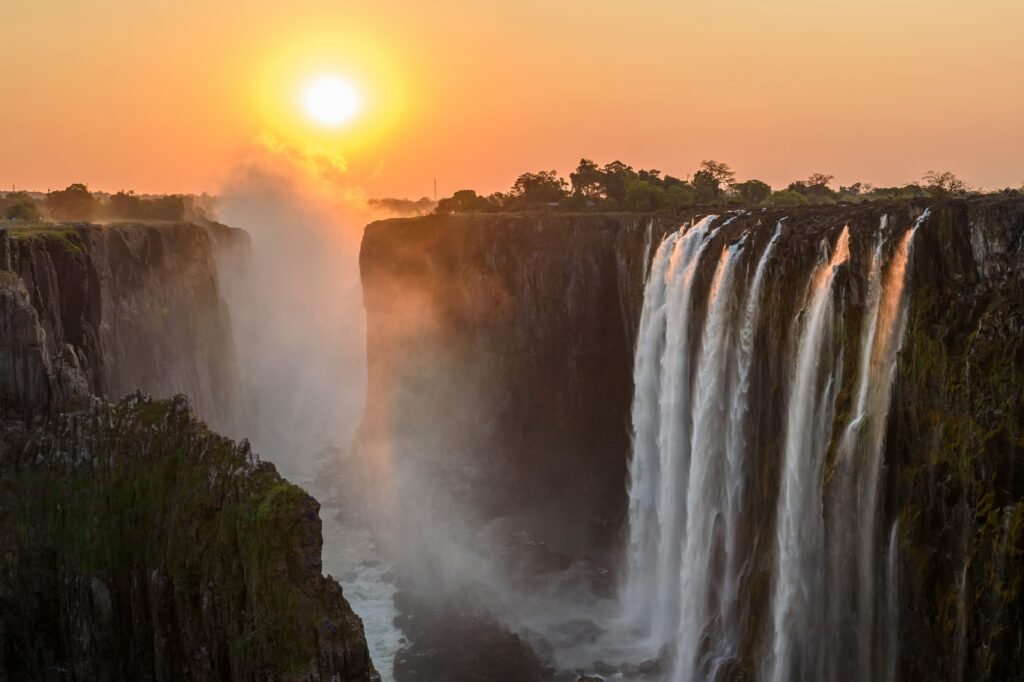
The first thing you notice at Victoria Falls is not the water. It is the sound.
Long before the waterfall comes into view, the roar fills the air and the ground begins to vibrate underfoot. A cloud of mist rises high above the treeline, earning the falls their local name, Mosi-oa-Tunya, which means The Smoke That Thunders. When the falls finally appear, it is easy to understand why local communities have held this place sacred for generations.
Victoria Falls sits on the Zambezi River at the border between Zambia and Zimbabwe. It is one of the widest waterfalls on Earth and a UNESCO World Heritage Site. During peak flow season, the volume of water passing over the edge is almost impossible to comprehend. The spray rises so high it creates its own rainfall in the surrounding forest, which stays permanently green even during dry season.
The most unforgettable experience at Victoria Falls is Devil’s Pool on the Zambian side. During low water season, a natural rock barrier allows swimmers to float right at the very edge of the falls. It is exactly as extraordinary and terrifying as it sounds.
Did You Know? The mist from Victoria Falls can rise more than 400 metres into the sky and can sometimes be seen from over 30 kilometres away.
2. Iguazu Falls, Argentina and Brazil
- Location: Border of Argentina and Brazil
- Height: Up to 82 metres
- Width: Approximately 2.7 kilometres
- Cascades: 275 individual falls
- Best Time to Visit: April to May and September to October
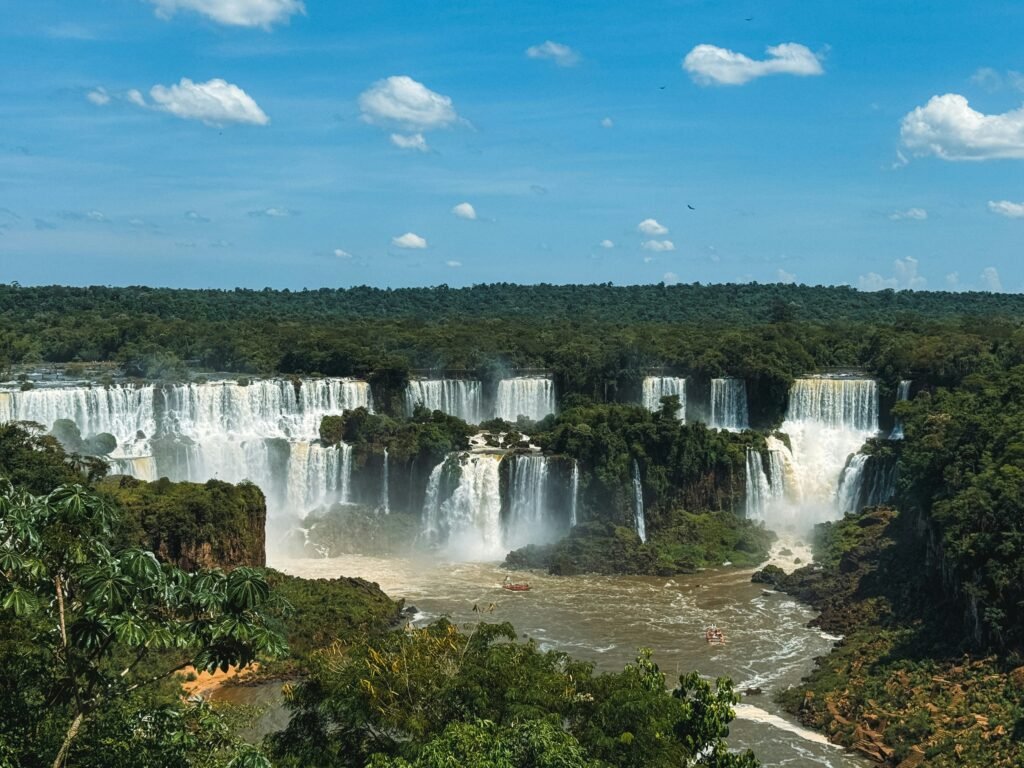
No single photo does Iguazu justice. This is not one waterfall. It is 275 of them, stretching nearly three kilometres across the border between Argentina and Brazil, surrounded by subtropical rainforest full of toucans, coatis, and iridescent blue morpho butterflies.
The largest section, known as the Devil’s Throat, is a U-shaped canyon where water drops 82 metres with enough force to create a permanent cloud of mist above it. Standing on the viewing platform, completely soaked within seconds, you start to understand why Eleanor Roosevelt reportedly said upon seeing Iguazu: “Poor Niagara.”
Walking the Brazilian side gives you panoramic views of the whole system. The Argentine side puts you right in the middle of it, on walkways threading through the spray between individual falls. Both sides are worth visiting.
Did You Know? Iguazu Falls is the largest waterfall system in the world. When it runs at full capacity, the combined flow is greater than the flow of the Amazon River at certain points.
3. Angel Falls, Venezuela
- Location: Canaima National Park, Bolivar State, Venezuela
- Height: 979 metres (tallest uninterrupted waterfall on Earth)
- Best Time to Visit: June to December
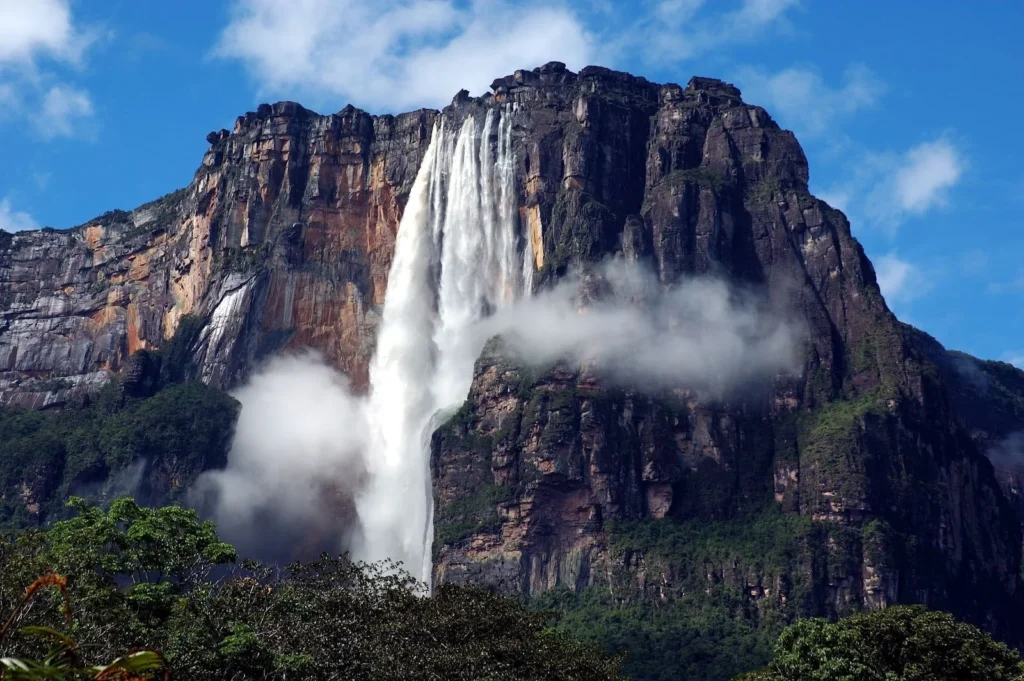
Angel Falls drops 979 metres from the edge of Auyán-tepui, a flat-topped mountain rising from the jungle of Canaima National Park. It is 15 times higher than Niagara Falls. The water falls so far that much of it turns to mist before it reaches the bottom, creating a permanent cloud that drifts through the surrounding jungle.
Getting there is part of the experience. The falls are not accessible by road. Visitors fly to Canaima by small plane, then take a river journey of several hours by boat through a landscape that looks genuinely prehistoric. Clouds frequently wrap around the falls, and some visitors spend days waiting for a clear view. When it comes, it is worth every hour of waiting.
The falls were named after Jimmie Angel, an American aviator who crash-landed his plane on top of the tepui in 1937. The local Pemon people had known about the falls for far longer and called it Kerepakupai Merú, meaning waterfall of the deepest place.
Did You Know? Angel Falls is so tall that wind disperses much of the water into fine mist before it reaches the ground. In very dry conditions, you can see the mist but not a solid stream of water at all.
4. Niagara Falls, USA and Canada
- Location: Border of New York State (USA) and Ontario (Canada)
- Height: Approximately 53 metres (Horseshoe Falls)
- Flow Rate: Over 168,000 cubic metres per minute
- Best Time to Visit: Late spring to early autumn. Summer evenings for the light show.
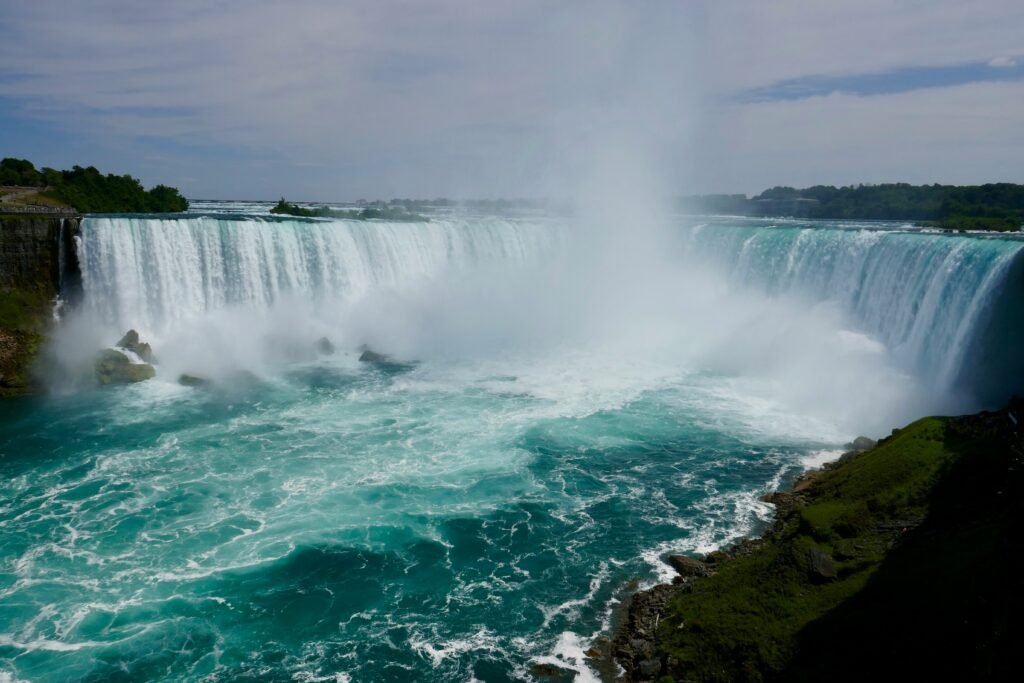
Niagara Falls is the most visited waterfall on Earth. That fact sometimes puts people off, but the falls themselves remain genuinely awe-inspiring regardless of how many tourists are standing beside you.
There are three separate falls here. Horseshoe Falls is the main event, sitting mostly on the Canadian side. American Falls and Bridal Veil Falls are on the US side. Together, they carry more water than any other waterfall in North America.
The Maid of the Mist boat tour takes you directly into the mist at the base of Horseshoe Falls. You will be completely drenched. The iconic blue ponchos they hand you will not prevent this. Nobody cares. Standing that close to that much falling water, completely overwhelmed by sound and mist and the sheer physical force of it, is one of those experiences that stays with you.
Did You Know? During the winter of 1848, Niagara Falls stopped flowing almost entirely for about 30 hours after ice from Lake Erie formed a dam upstream. People walked out across the exposed riverbed.
5. Plitvice Waterfalls, Croatia
- Location: Plitvice Lakes National Park, Lika region, Croatia
- Number of Lakes: 16
- Tallest Fall: Veliki Slap, approximately 78 metres
- Best Time to Visit: April to June or September to October
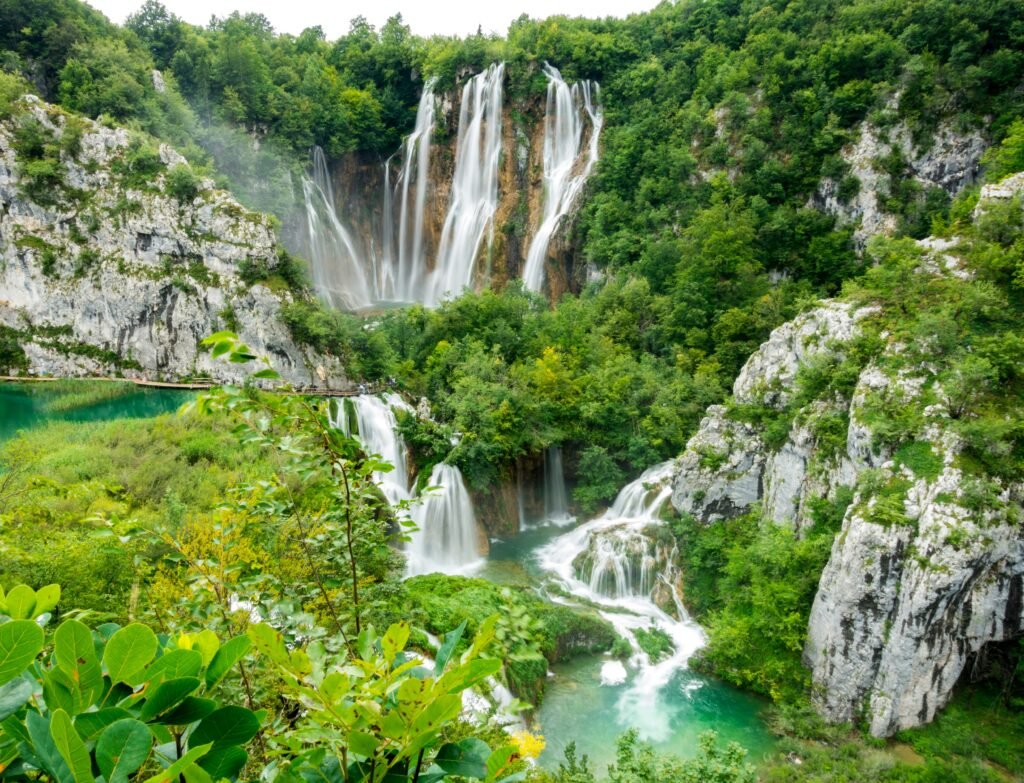
Plitvice does not look like a real place. A chain of 16 turquoise lakes connected by dozens of small waterfalls, set in a forest of beech and fir trees that turns gold and orange in autumn. Wooden walkways carry you right over the water, through the spray, past pools so clear you can see the bottom in colour-saturated detail.
The water gets its extraordinary colour from calcium carbonate dissolved in the limestone bedrock. This same mineral slowly builds up the natural dams that separate the lakes from one another, a geological process that continues today. The park is slowly reshaping itself, year by year, one mineral deposit at a time.
Over a million visitors come here annually. That is a lot of people for one national park, which is why the Croatian government limits visitor numbers and rotates access between different sections. Book well in advance, especially for summer.
Did You Know? The travertine barriers that form the natural dams at Plitvice are still growing. The park is technically a living geological structure that changes shape over decades.
6. Kaieteur Falls, Guyana
- Location: Kaieteur National Park, Potaro-Siparuni Region, Guyana
- Height: 226 metres single drop
- Width: 113 metres
- Best Time to Visit: May to June and November to December
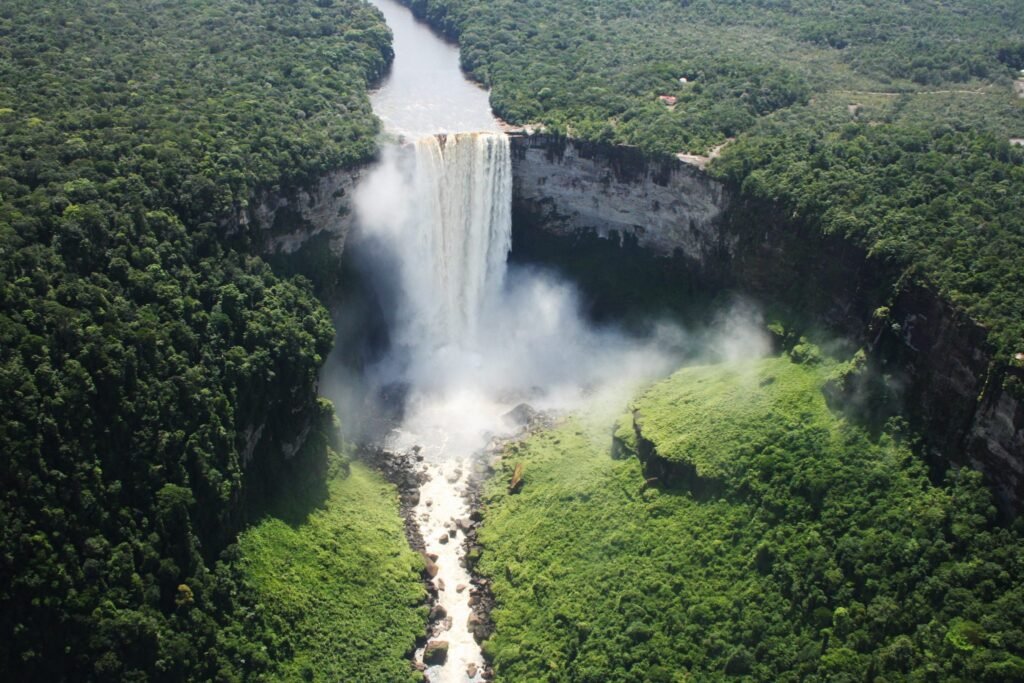
Most people have never heard of Kaieteur. That is exactly what makes it extraordinary.
A single dramatic plunge of 226 metres, five times taller than Niagara, in the middle of virtually untouched Amazon rainforest in one of South America’s least visited countries. The surrounding jungle is home to golden poison dart frogs, giant river otters, and a species of swift that nests exclusively behind the waterfall itself.
The falls are accessible only by small plane from Georgetown. There are no roads. The limited visitor numbers mean you can stand here and hear nothing but falling water and jungle, which is increasingly rare for a waterfall of this scale and grandeur.
Did You Know? Kaieteur Falls has a greater single-drop volume than any other waterfall on Earth. The force of the falling water excavated a deep plunge pool at the base that geologists estimate is more than 12 metres deep.
7. Seljalandsfoss, Iceland
- Location: Southern Iceland, near the Ring Road
- Height: 65 metres
- Best Time to Visit: June to August for trail access. Winter for ice formations.
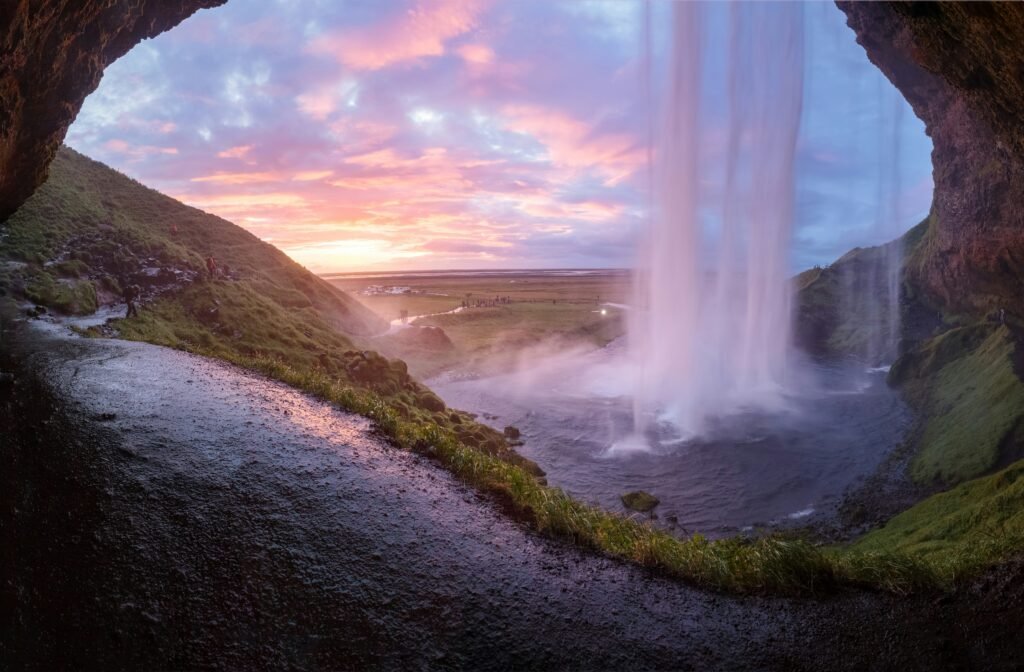
What makes Seljalandsfoss unique on this list is simple: you can walk behind it.
A trail curves around and behind the falls, putting the curtain of water between you and the landscape on the other side. Standing there, watching the world through a wall of falling water, is one of those experiences that is impossible to fully communicate and deeply satisfying to have.
The trail is slippery. Waterproof gear is not optional. But the view from behind the falls, especially in evening light when the sun sits low in the Icelandic sky, is worth every wet step.
Did You Know? Seljalandsfoss is fed by the Seljalandsá River, which originates under Eyjafjallajokull glacier, the same volcano whose 2010 eruption disrupted air travel across Europe for weeks.
8. Gullfoss, Iceland
- Location: Hvítá River, southwestern Iceland
- Height: 32 metres (two-tiered)
- Meaning of Name: Golden Falls
- Best Time to Visit: Year round. Summer for full access. Winter for dramatic ice.
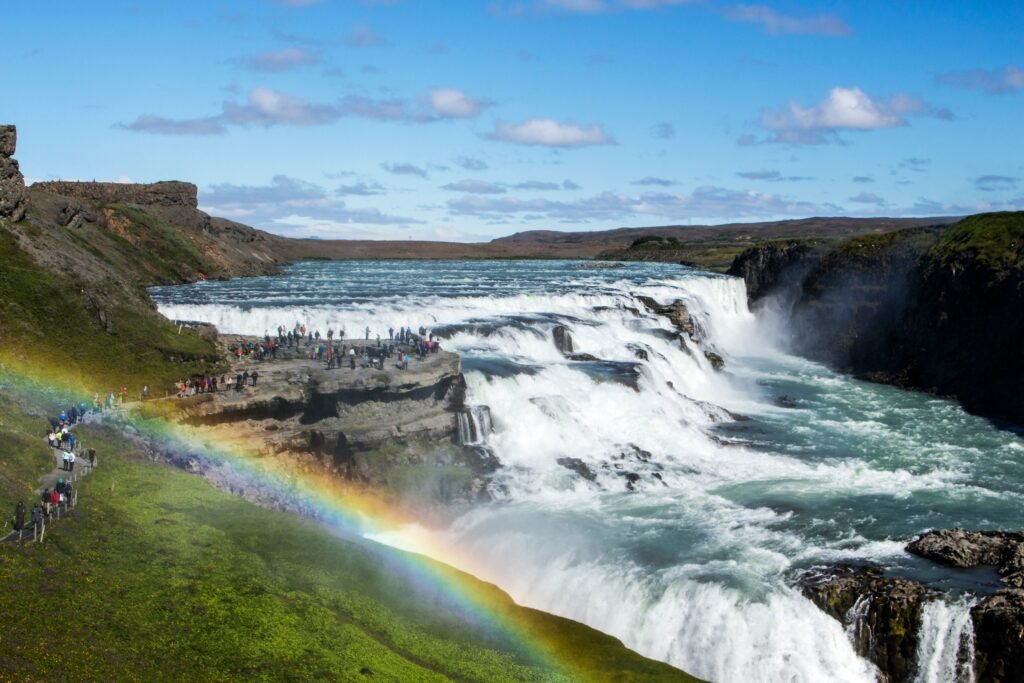
Gullfoss falls in two stages into a 70-metre-deep canyon, and when the Icelandic sun hits the spray at the right angle, rainbows form in the mist with almost predictable regularity. The name, Golden Falls, refers to the golden shimmer the water takes on in certain light conditions.
The history of Gullfoss is as interesting as the falls themselves. In the early twentieth century, a foreign investor attempted to buy the falls for hydroelectric development. A local farmer’s daughter, Sigríður Tómasdóttir, walked barefoot to Reykjavik to protest and threatened to throw herself into the falls if the sale went through. She is now considered Iceland’s first environmental activist. The falls were eventually protected, and a statue of her stands nearby.
Did You Know? Iceland has approximately 10,000 waterfalls across the country, more waterfalls per square kilometre than almost anywhere else on Earth.
9. Yosemite Falls, USA
- Location: Yosemite National Park, California, USA
- Total Height: 739 metres (combined three tiers)
- Best Time to Visit: April to June during peak snowmelt
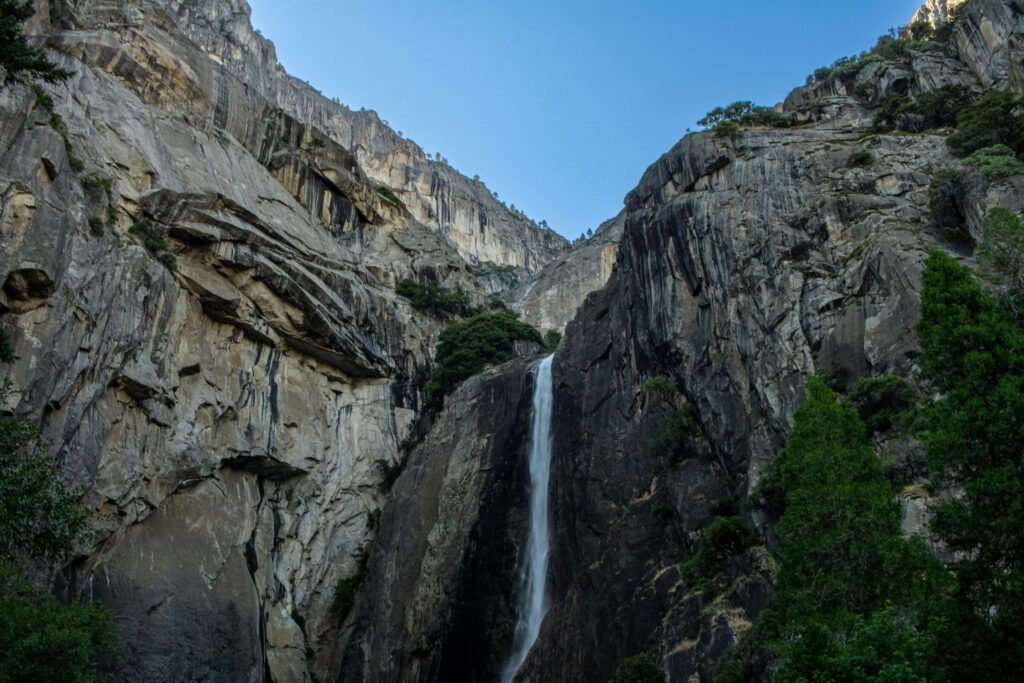
Yosemite Falls is the tallest waterfall in North America, dropping in three stages from the top of the valley walls down to the valley floor. In spring, when Sierra Nevada snowmelt fills the river, the sound of the falls can be heard from kilometres away across the park.
By late summer, the falls sometimes slow to almost nothing. That seasonal rhythm is part of what makes Yosemite Falls worth experiencing in the right season. April through June, when the park is green and the water is roaring, is the moment to be here.
And every February, if conditions align, a natural phenomenon turns the nearby Horsetail Fall into what looks like flowing lava. The setting sun hits at exactly the right angle to illuminate the water in shades of orange and red. Photographers gather for weeks hoping for clear skies on the right evening.
Did You Know? In extremely wet years, Yosemite Falls can be heard from the valley floor continuously for months, even at night. The sound changes pitch depending on water volume, almost like music.
10. Ban Gioc Falls, Vietnam and China
- Location: Cao Bang Province, Vietnam (also known as Detian Falls in China)
- Height: 30 metres
- Width: 300 metres
- Best Time to Visit: September to October
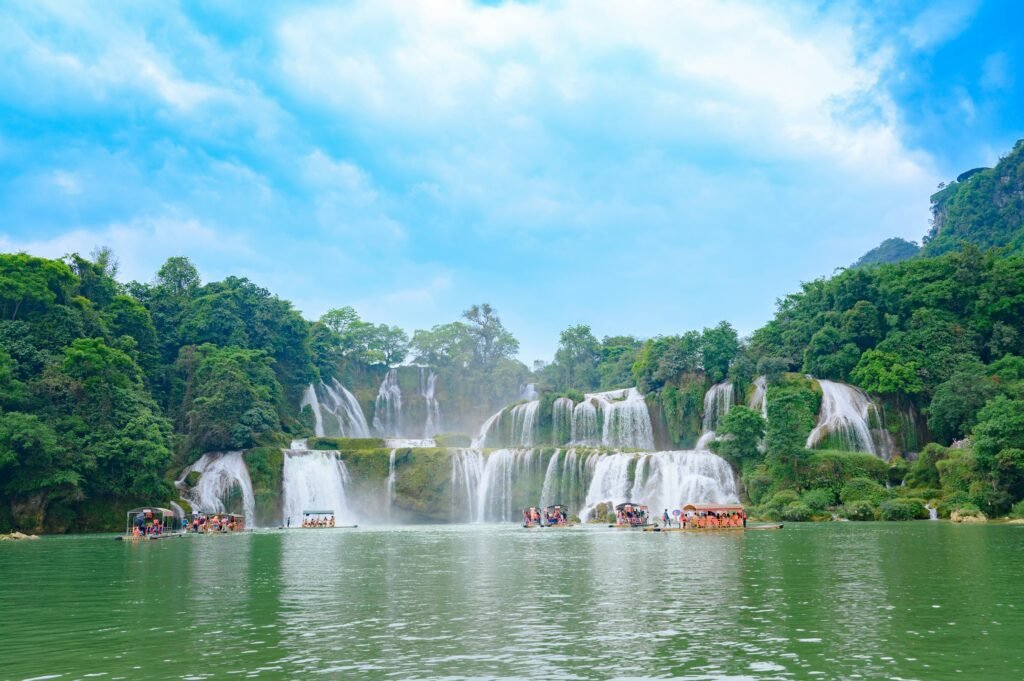
Ban Gioc sits along the border between Vietnam and China in a landscape of limestone karst peaks, subtropical forest, and traditional Tay villages. It is Asia’s largest waterfall and one of the most visually extraordinary on this list.
The falls drop in multiple tiers through a layered series of natural terraces covered in green algae and vegetation. Bamboo rafts take visitors to the base. The surrounding area, filled with narrow roads, rice paddies, and quiet rural life, adds another dimension that purely spectacular scenery alone cannot provide.
Did You Know? Ban Gioc Falls lies exactly on the international border between Vietnam and China. The two countries share jurisdiction over the waterfall, and access points exist on both sides.
11. Dettifoss, Iceland
- Location: Vatnajokull National Park, northeastern Iceland
- Height: 44 metres
- Width: 100 metres
- Best Time to Visit: June to August
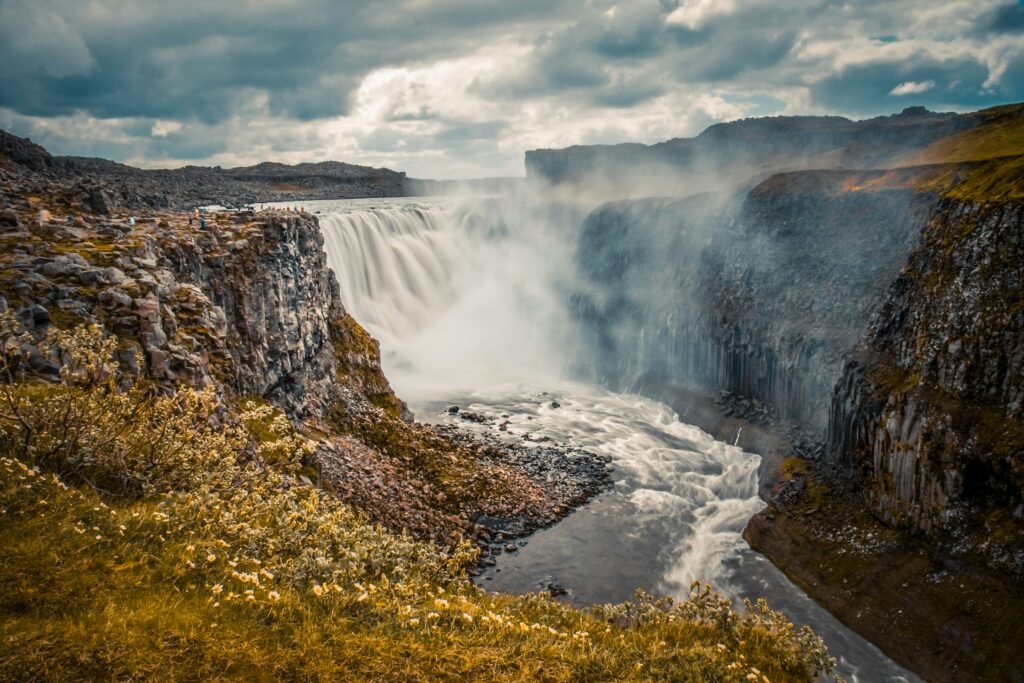
Dettifoss is the most powerful waterfall in Europe. Nothing about it is gentle.
The water is glacier-grey, loaded with sediment from the Vatnajokull ice cap, and it falls with a force that physically shakes the ground around the viewing platforms. The spray soaks you from fifty metres away. The roar is constant and total. Standing here, you feel the raw mechanical force of the planet in a way few other places produce.
Parts of the 2012 film Prometheus were filmed here, which makes sense. Dettifoss looks like a place at the edge of the known world.
Did You Know? Dettifoss discharges an average of 193 cubic metres of water per second, making it the most powerful waterfall in Europe by volume and force.
12. Havasu Falls, USA
- Location: Havasupai Tribe Reservation, Grand Canyon, Arizona, USA
- Height: Approximately 30 metres
- Water Colour: Turquoise to aquamarine
- Best Time to Visit: March to May and September to October
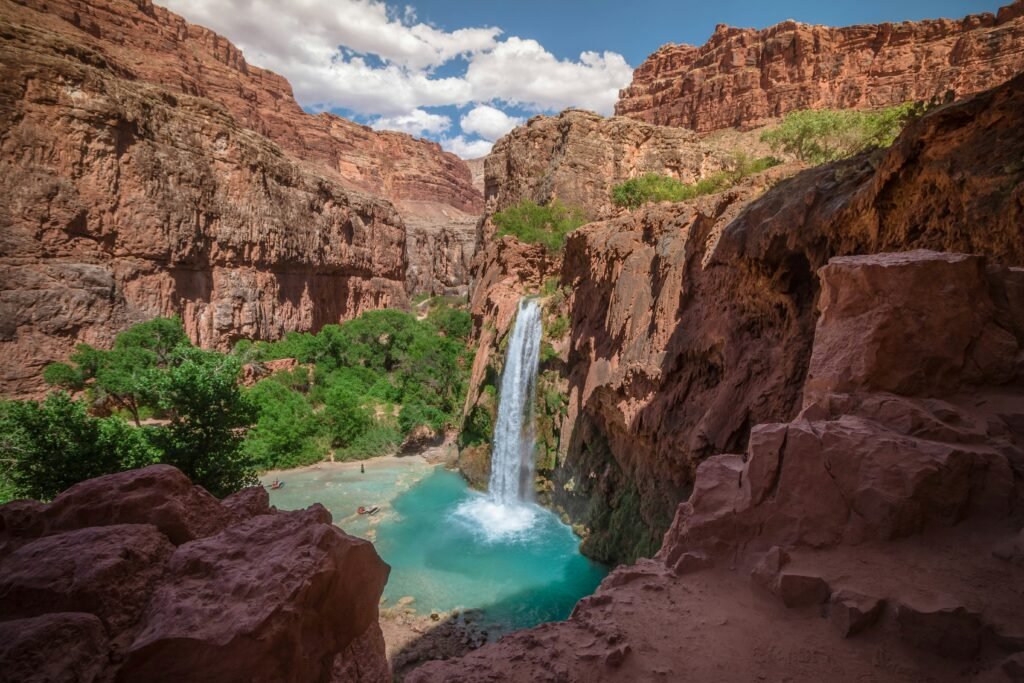
Havasu Falls sits inside the Grand Canyon on land belonging to the Havasupai Tribe, one of the most isolated communities in the United States. Getting there requires a 16-kilometre hike through desert terrain with no roads and limited shade. Then you round a corner, and there it is: a waterfall of impossible turquoise water falling into a pool you can swim in, surrounded by red canyon walls.
The colour comes from high concentrations of calcium carbonate and magnesium in the water. It looks digitally enhanced in photographs. It is completely real.
A permit from the Havasupai Tribe is required and books out months in advance. This is not a casual day trip. The effort required to get here is also, in some ways, what makes it so special.
Did You Know? The turquoise colour of Havasu Falls can actually change between visits. Flood events periodically alter the mineral composition and travertine formations, sometimes making the water appear more blue, green, or even brown for months afterward.
13. Skogafoss, Iceland
- Location: Skogar, southern Iceland
- Height: 62 metres
- Best Time to Visit: Year round. Rainbows most common in afternoon sun.
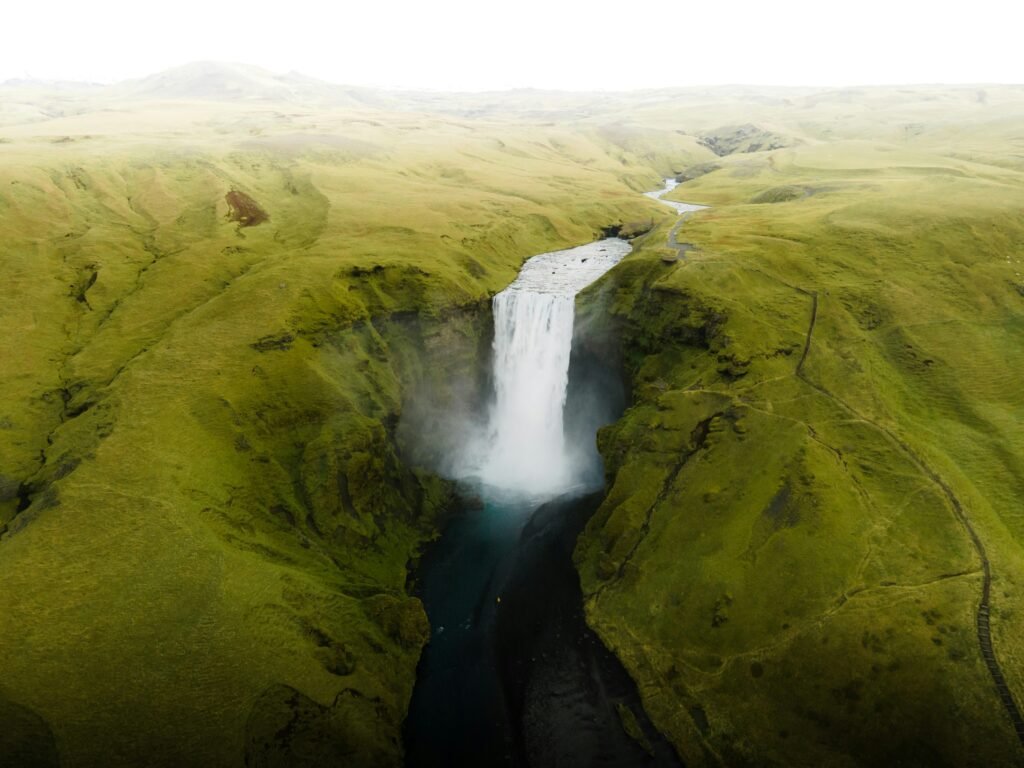
Skogafoss falls in a perfectly rectangular curtain. There are no rocks breaking the flow, no irregular edges. Just a clean, consistent wall of white water dropping 62 metres into a pool at the base.
On sunny afternoons, a rainbow forms at the base with remarkable reliability. A staircase of 527 steps climbs to the top of the falls, where the Skoga River stretches back into the highlands toward the Myrdalsjokull glacier. The view from the top is as good as the view from the bottom.
According to local legend, a Viking settler hid a chest of gold behind the falls. The story says a young boy once grabbed the ring on the chest, but it broke off before he could pull the treasure free. The ring is said to be in the local museum. The gold has never been found.
Did You Know? Skogafoss was much closer to the sea when it was first formed. Over thousands of years, coastal erosion has pushed the Icelandic shoreline outward by approximately five kilometres, leaving the falls stranded inland.
14. Tugela Falls, South Africa
- Location: Royal Natal National Park, KwaZulu-Natal, South Africa
- Height: 948 metres (five tiers)
- Best Time to Visit: December to February during wet season
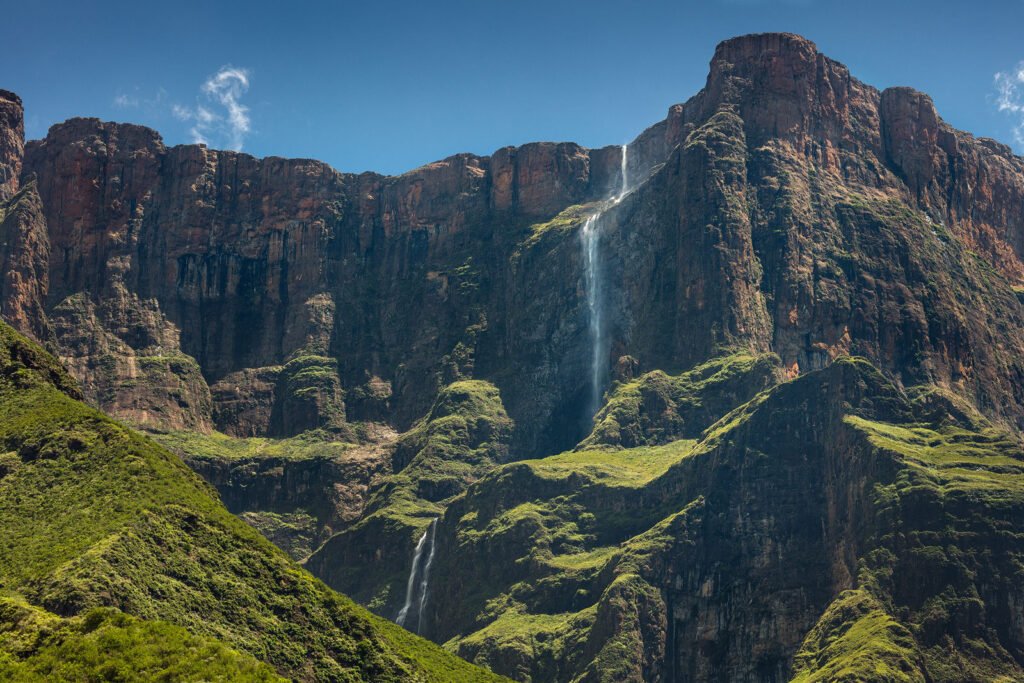
Tugela Falls is technically the second tallest waterfall in the world, dropping 948 metres in five separate tiers down the face of the Amphitheatre cliff in the Drakensberg Mountains. From a distance, it appears as a thin white thread against orange and grey rock, almost too delicate to be real.
The hike to the top of the Amphitheatre is one of the great hiking experiences in Africa. At the rim, on clear days, you can see across the plains below for what feels like impossible distances. The falls themselves, when seen from below, create a completely different impression: five stages of falling water that seem to emerge from the clouds.
Did You Know? Tugela Falls only runs at full capacity during the summer rainy season. In dry months, some tiers reduce to a trickle or disappear entirely. The best time to see all five stages running is January to March.
15. Olo’upena Falls, Hawaii, USA
- Location: Molokai, Hawaii, USA
- Height: 900 metres
- Access: Boat or helicopter only
- Best Time to Visit: Winter months
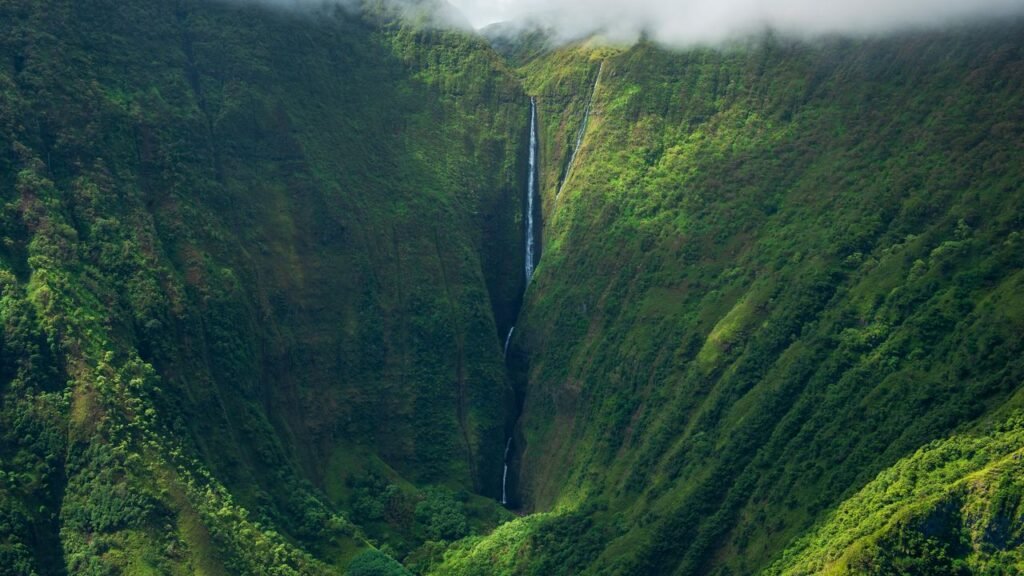
Olo’upena Falls is the tallest waterfall in the United States and one of the tallest on Earth. It drops 900 metres from the sea cliffs of Molokai, the most isolated of the main Hawaiian Islands. You cannot reach it by road. You cannot hike to it. You can only see it from the ocean or from the air.
That inaccessibility keeps it almost entirely off the tourist trail, which means it remains genuinely wild in a way that most famous waterfalls no longer are. A boat or helicopter tour from Molokai on the right day delivers views of this waterfall against the tallest sea cliffs in the world, one of the most dramatic natural scenes the Hawaiian Islands have to offer.
16. Tumpak Sewu, Indonesia
- Location: East Java, Indonesia
- Height: Approximately 120 metres
- Meaning of Name: A Thousand Waterfalls
- Best Time to Visit: December to April for maximum volume. May to October for safer trails.
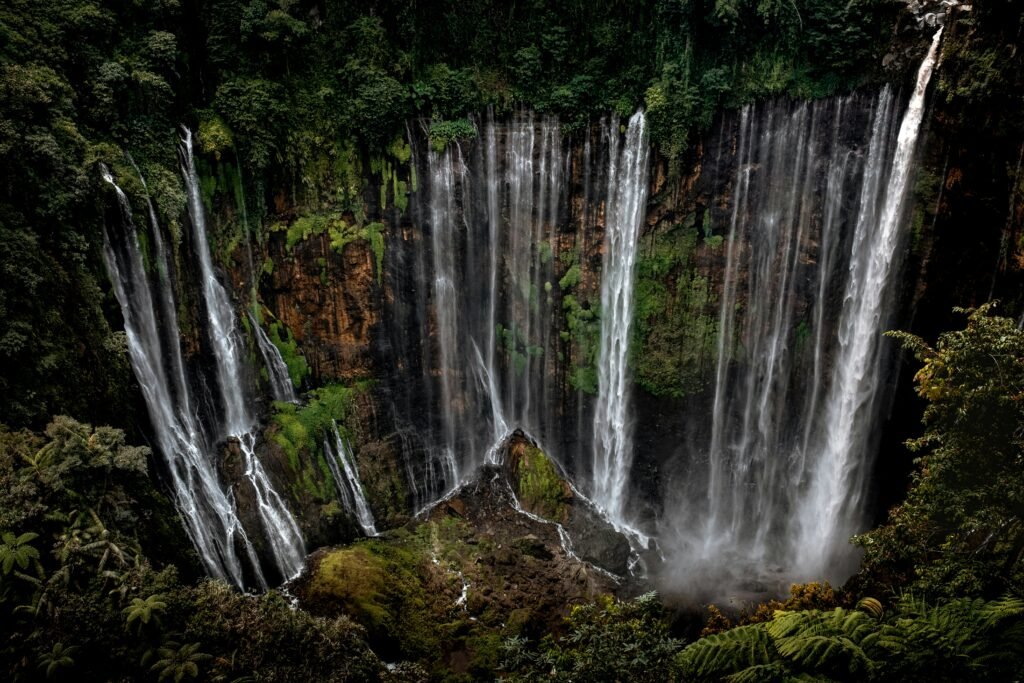
Tumpak Sewu earns its name. The main falls drop about 120 metres in a horseshoe shape, but dozens of smaller cascades tumble down the surrounding cliff face at the same time, creating a layered curtain of water so wide it fills the entire horizon of the canyon.
Getting to the base requires a steep descent and multiple river crossings. It is a genuine adventure that requires reasonable fitness and a willingness to get muddy. The reward is standing at the bottom of one of the most extraordinary waterfall landscapes on Earth, surrounded on three sides by falling water, in a canyon that feels entirely secret.
Did You Know? Tumpak Sewu is located near an active volcano, Mount Semeru. The volcanic geology of the area is part of what creates the dramatic cliff formations the falls pour over.
17. Wli Falls, Ghana
- Location: Volta Region, Ghana, near the border with Togo
- Height: 80 metres (lower falls)
- Best Time to Visit: April to October
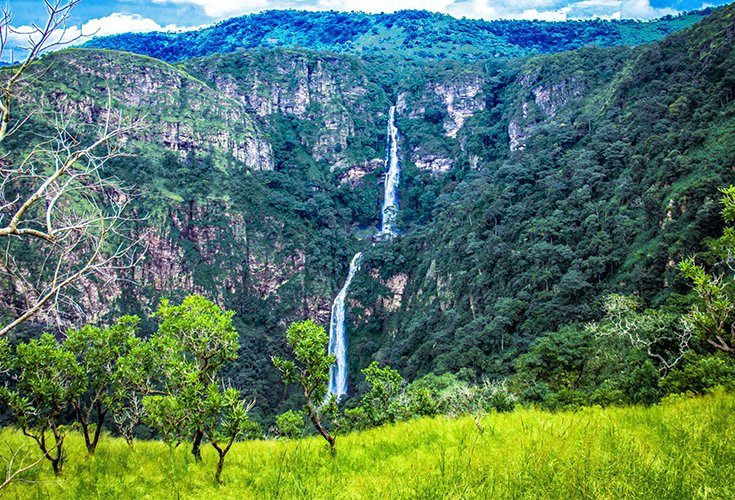
Wli Falls is the highest waterfall in West Africa. It drops 80 metres in two stages through thick rainforest in Ghana’s Volta Region, and it is home to one of the largest colonies of straw-coloured fruit bats on the continent.
At dusk, thousands of bats emerge from the trees and cliffs surrounding the falls and stream across the sky in long ribbons. It is one of the most spectacular wildlife moments in West Africa, and most visitors do not know it is coming until it happens.
The walk to the lower falls takes about 30 minutes on a shaded jungle path. The upper falls require a 3-hour hike and considerably more effort. Few tourists make the full journey to the upper level.
Did You Know? The bat colony at Wli Falls is so large that local farmers consider the bats beneficial neighbours. The bats pollinate crops and disperse seeds across the surrounding landscape, supporting the forest that feeds the waterfall.
18. Sipi Falls, Uganda
- Location: Mount Elgon, Eastern Region, Uganda
- Number of Falls: Three
- Best Time to Visit: June to August and December to February
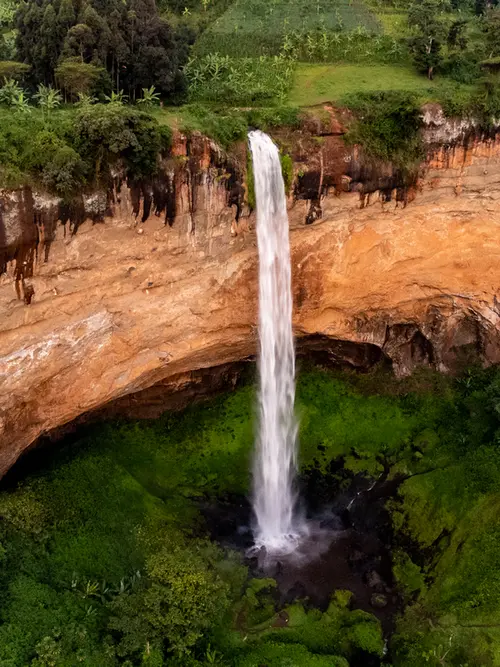
Sipi Falls sits on the slopes of Mount Elgon, an ancient volcanic mountain on the border between Uganda and Kenya. There are three separate waterfalls at Sipi, each with its own character and its own reason for the hike.
The surrounding landscape is covered in coffee farms. The Arabica beans grown here in the volcanic soil are among the finest in East Africa. Local guides lead waterfall hikes that combine the natural spectacle with an introduction to the people and agriculture of the mountain slopes.
From the top of the highest fall, on clear days, the plains of northeastern Uganda stretch to the horizon. It is the kind of view that makes you feel the size of the continent.
Did You Know? Mount Elgon has the world’s largest volcanic caldera that can be hiked to the rim. Sipi Falls is just one reason to visit a mountain that remains significantly underexplored compared to Kilimanjaro and the Rwenzoris.
19. Erin-Ijesha (Olumirin) Waterfall, Osun State, Nigeria
- Location: Osun State, Nigeria
- Height: 20 metres (approx. first level)
- Access: Road and hiking trails
- Also Known As: Olumirin Waterfalls
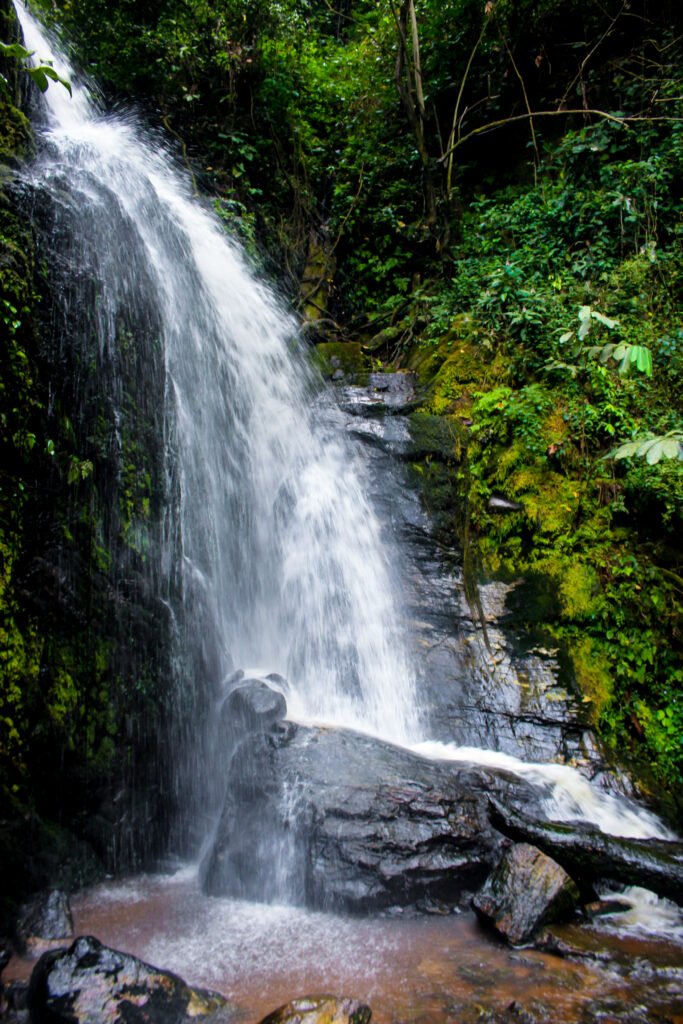
Erin-Ijesha Waterfalls appeared as a majestic seven-tiered wonder hidden in the lush hills of southwestern Nigeria. Discovered in 1140 AD by a daughter of Oduduwa, the 20-metre-tall first tier gives way to six increasingly challenging upper levels that have drawn adventurous travelers ever since who want to conquer a landscape that looks too dramatic to be real.
It is completely real. The surrounding landscape, deep forests surrounded by sheer rocky cliffs with no roads and only steep steps, makes the physical climb part of the experience. The hiker ascends into the canopy and looks down at the valley below. If stamina allows, reaching the seventh tier reveals a hidden, peaceful village at the very top.
20. Jiulong Waterfall, China
- Location: Luoping County, Yunnan Province, China
- Height: Nine individual waterfalls in a single system
- Best Time to Visit: March to April
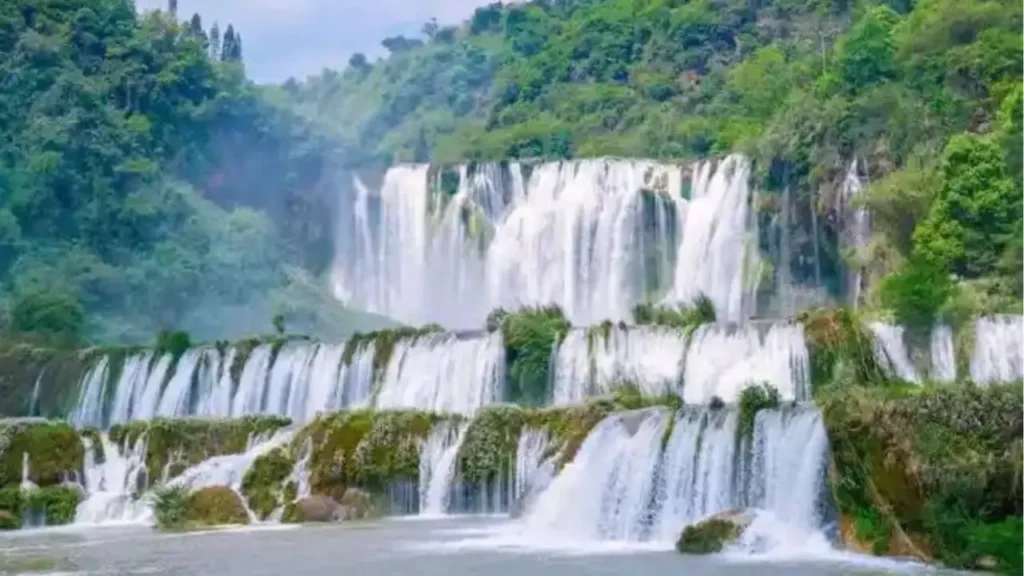
Jiulong means Nine Dragons, and the system earns it. Nine separate waterfalls cascade down a terraced hillside in Yunnan Province, fed by rivers flowing off the surrounding plateau. In spring, the surrounding fields fill with yellow canola flowers in bloom, and the combination of golden fields, green terraces, and falling white water creates one of the most photographed landscapes in southern China.
Outside China, Jiulong is not well known, which means visitors who make the journey there find something that still feels like a genuine discovery rather than a standard tourist attraction.
Did You Know? The Jiulong area of Yunnan Province sits in a biodiversity hotspot known as one of the most species-rich temperate regions on Earth. The surrounding hills contain thousands of plant species and hundreds of bird species.
21. Krka Waterfalls, Croatia
- Location: Krka National Park, Dalmatia, Croatia
- Best Time to Visit: May to June and September
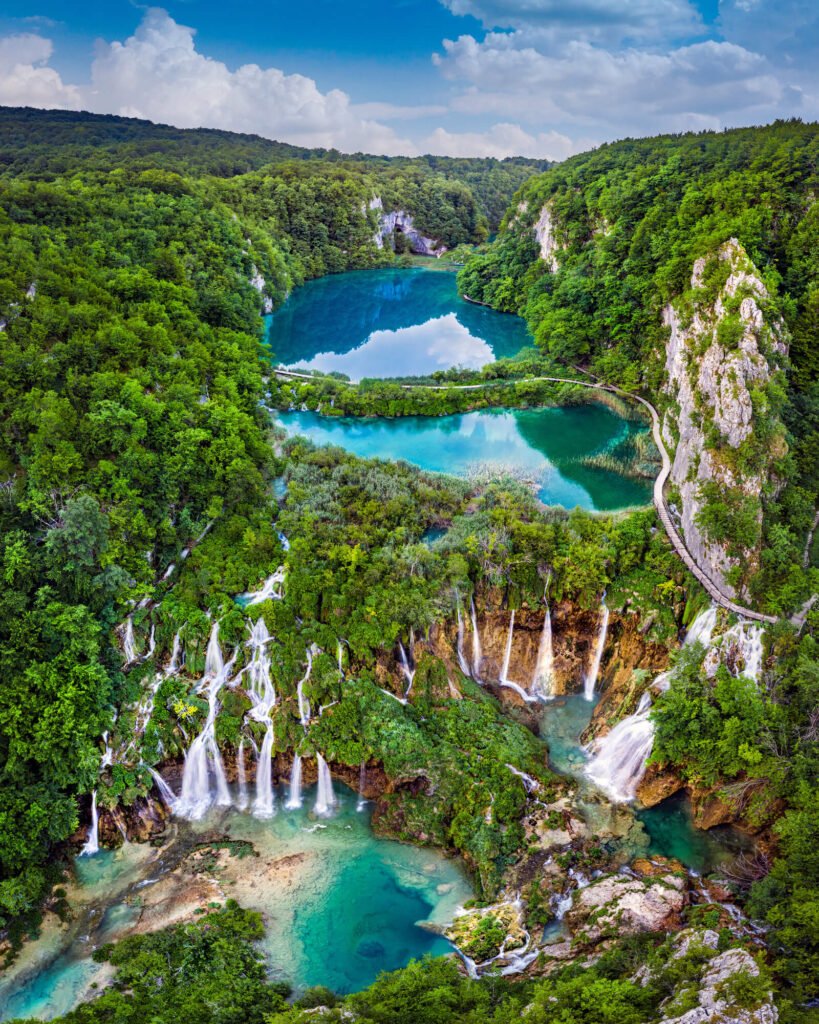
Krka National Park sits in the Dalmatian interior of Croatia, slightly inland from the Adriatic coast. The Krka River has carved its way through limestone gorges over thousands of years, creating a series of waterfalls and emerald pools that vary in character from dramatic single drops to wide, multi-tiered cascades.
Unlike Plitvice, swimming is permitted in certain sections of Krka, which makes it a popular destination for visitors who want to be in the water rather than beside it. The most visited section, Skradinski Buk, is a broad, layered cascade surrounded by paths and picnic areas.
Did You Know? The Krka River has been used for hydroelectric power since 1895, making it home to one of the earliest alternating current power plants in the world, built around the same time as Niagara Falls.
22. Agbokim Waterfalls, Cross River, Nigeria
- Location: Etung Local Government Area, Cross River State, Nigeria
- Height: Seven distinct streams cascading down a single cliff face
- Best Time to Visit: June to September (during the peak rainy season)
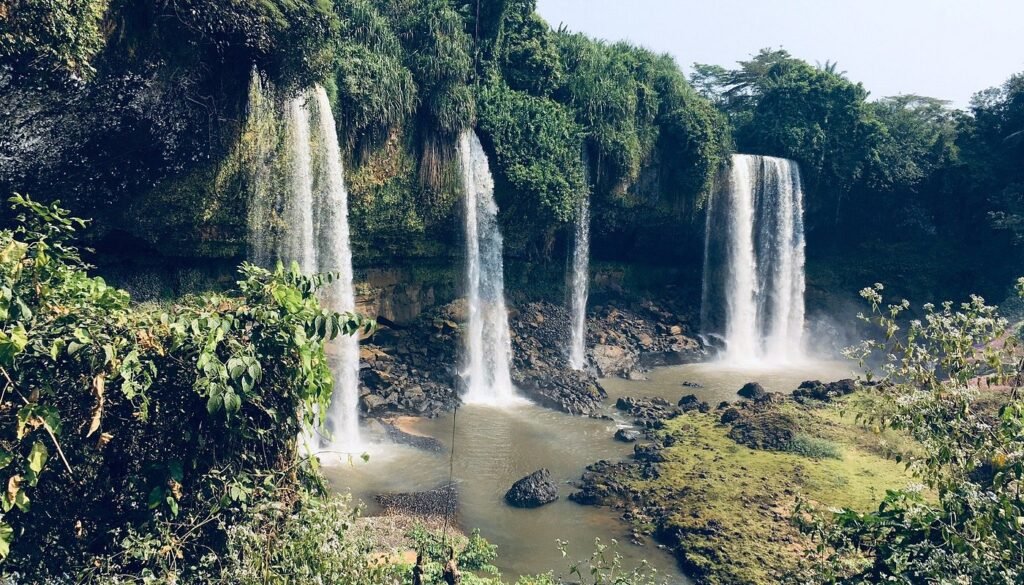
The Agbokim Waterfalls are a spectacular collection of seven cascading streams surrounded by lush tropical rainforest. Several rivers feed into it, including the Cross River system, which plunges over a massive cliff face into a misty valley, creating a frequent rainbow effect that photographers stop for constantly.
These falls are not as well known internationally as the country’s urban tourist hubs, which means many visitors travel across Nigeria without stopping. Those who do stop tend to stay much longer than planned.
Did You Know? The Agbokim Waterfalls are sometimes called the “Seven Faces of Nature” because, unlike single-stream waterfalls, it consists of seven distinct rivers plunging simultaneously down a horseshoe cliff. The combination of seven parallel cascades and the constant, vibrant rainbows in the mist creates a rainforest spectacle that is almost unique in the world.
23. Tukad Cepung, Bali, Indonesia
- Location: Bangli Regency, central Bali, Indonesia
- Best Time to Visit: May to September. Visit before 11am for best light.
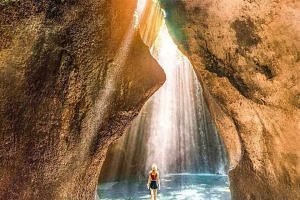
Tukad Cepung does not make this list because of its size. It makes this list because of what happens when sunlight falls into the narrow canyon that surrounds it.
The waterfall drops through a gap in the rock into a shallow pool inside a cave-like enclosure. In the morning, sunbeams cut through the opening and fall through the mist in distinct visible shafts of light, creating a scene that photographers travel hours to reach. You can swim in the pool. Children can visit safely. The trail to reach it takes about 15 minutes through jungle.
Did You Know? Tukad Cepung translates approximately to “spring that pours” in Balinese. The waterfall is considered sacred by local communities and has been part of the religious landscape of central Bali for centuries.
24. Bakers Falls, Sri Lanka
- Location: Horton Plains National Park, Central Province, Sri Lanka
- Height: 20 metres
- Best Time to Visit: December to March and July to September
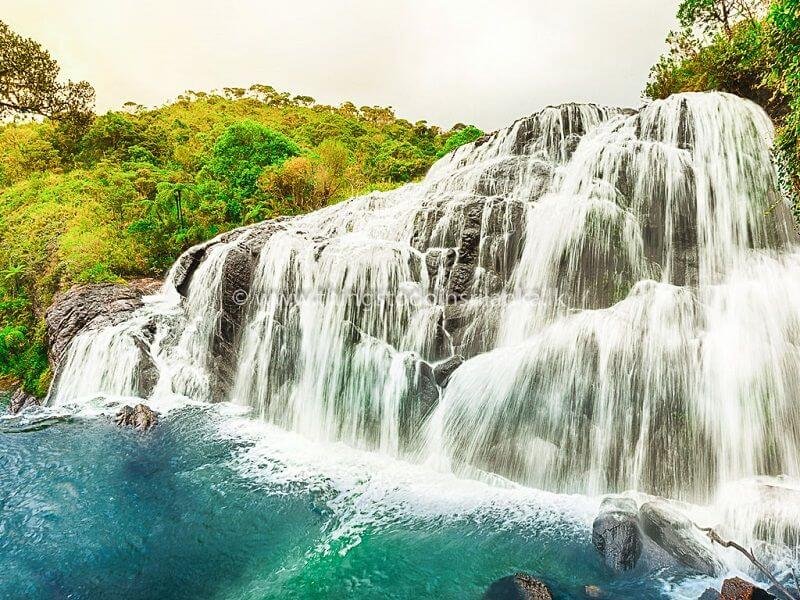
Horton Plains sits at 2,000 metres above sea level in central Sri Lanka, a plateau of cloud forest and grassland that feels completely different from the tropical island below it. The ecosystem here is home to species found nowhere else on Earth, including the Sri Lankan leopard, sambar deer, and dozens of endemic birds.
Bakers Falls drops 20 metres into a pool surrounded by cloud forest. It is the smallest waterfall on this list. But the journey there, through highland grassland shrouded in mist, past endemic rhododendrons and tree ferns, past the dramatic escarpment known as World’s End where the plateau drops sharply 870 metres to the lowlands below, makes it part of one of the most memorable natural hikes in Asia.
25. Kongou Falls, Gabon
- Location: Ivindo National Park, Ogooue-Ivindo Province, Gabon
- Height: Approximately 30 metres
- Width: 200 metres
- Best Time to Visit: November to February
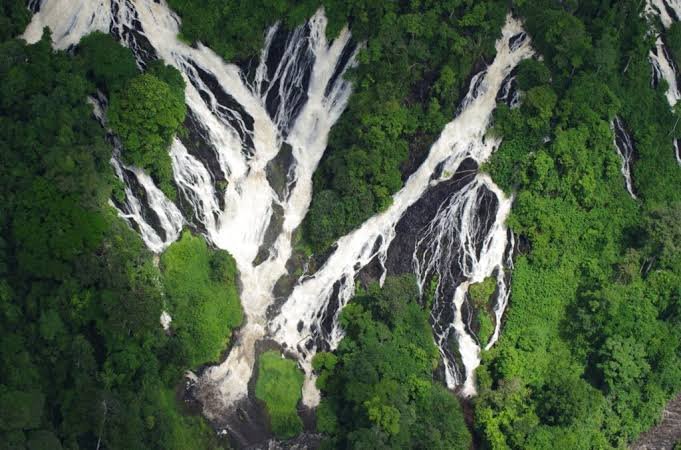
Kongou Falls is the most remote waterfall on this list and possibly the most spectacular. It sits inside Ivindo National Park in central Gabon, deep in one of the largest intact blocks of rainforest remaining in Africa.
There are no roads. Reaching the falls requires a multi-day river journey through jungle that is genuinely wild. Forest elephants, western lowland gorillas, chimpanzees, bongo antelopes, and hundreds of bird species share this landscape. Kongou is not simply a waterfall. It is a destination inside one of the last places on Earth where the rainforest exists the way it has for millions of years.
The falls themselves drop 30 metres across a 200-metre width, framed entirely by untouched forest. No viewing platforms. No crowds. Just the water and the jungle.
Did You Know? Gabon protects approximately 11 percent of its total land area as national parks, one of the highest proportions of any country on Earth. Ivindo National Park was created in 2002 specifically to protect the Congo Basin rainforest ecosystem.
Frequently Asked Questions
What is the most beautiful waterfalls in the world? This is genuinely subjective, but Victoria Falls and Iguazu Falls appear on almost every list of the world’s greatest natural wonders. Victoria Falls offers the most dramatic single experience. Iguazu is the largest system. Angel Falls is the tallest. The best answer depends on what moves you most.
What is the tallest waterfall in the world? Angel Falls in Venezuela, at 979 metres. It is 15 times taller than Niagara Falls.
What is the widest waterfall in the world? Khone Phapheng Falls in Laos, at over 10 kilometres wide, is technically the widest. By most other measures, Iguazu Falls is considered the largest waterfall system.
Which waterfall has the most water flow? Boyoma Falls in the Democratic Republic of Congo has the greatest average annual flow of any waterfall on Earth, discharging approximately 17,000 cubic metres per second.
Are waterfalls dangerous to visit? The viewing areas at most famous waterfalls are safe and well managed. Risks increase when visitors leave marked paths, especially near edges and slippery surfaces. Always follow local signage and guidance.
Which African waterfall is the most impressive? Victoria Falls is the most famous and most visited by far. Tugela Falls in South Africa is taller. Kongou Falls in Gabon is arguably the most spectacular from a wilderness perspective. All three are extraordinary.
Can you swim at any of these waterfalls? Yes. Havasu Falls in Arizona, Krka in Croatia, and Sipi Falls in Uganda all offer swimming opportunities near their falls. Always check local conditions and regulations before entering the water.
Explore Responsibly
Beautiful places stay beautiful when we care for them.
When visiting waterfalls and the natural areas around them, stay on marked trails and viewing platforms. Climbing barriers or approaching edges for photographs causes accidents every year. Leave no trace: take everything you brought with you when you leave. Support local guides and communities where they exist. Respect wildlife from a safe distance. Be aware that flash floods can occur near waterfalls with little warning, particularly in tropical and mountainous regions.
The places on this list exist because someone protected them. That protection depends on visitors who treat these places with genuine respect.
Final Thought
Until our next adventure…
Twenty-five most beautiful waterfalls in the world. Every continent except Antarctica. Thousands of litres of water falling every second across every one of them, right now, whether anyone is watching or not.
That is the thing about natural wonders. They do not exist for us. They have been here for millions of years and they will continue long after we are gone. The best we can do is show up, pay attention, and let them remind us how genuinely extraordinary this planet is.
Which one would you visit first? Drop it in the comments. We would love to know.
Keep exploring. The Earth Explorer